
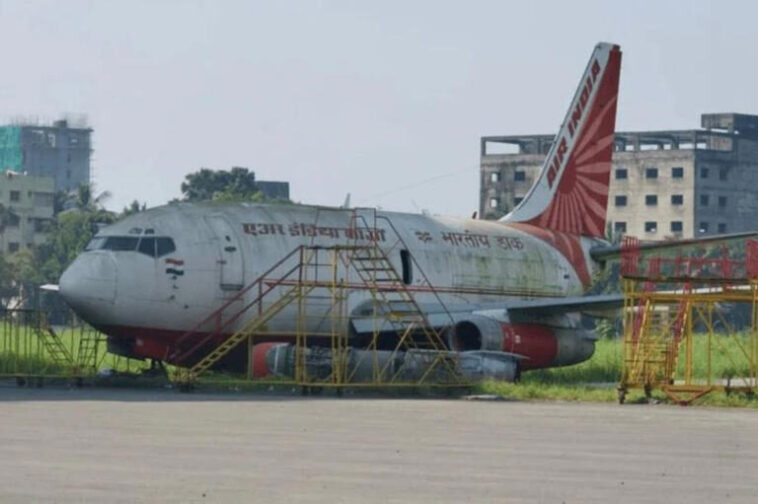
In a turn of events that feels more like a cinematic mystery than aviation logistics, Air India missing Boeing 737 records have finally been updated. After disappearing from the airline’s official books for over 13 years, a Boeing 737-200 has been recovered at Kolkata Airport.
The discovery comes during a sensitive time for the carrier, which is still navigating the aftermath of a tragic summer crash that claimed 260 lives. The “missing” jet didn’t vanish into thin air; instead, it sat in plain sight, abandoned and collecting dust on the tarmac at Netaji Subhash Chandra Bose International Airport.
How an Entire Aircraft Goes Missing
You might wonder how a multi-million dollar piece of machinery like an Air India missing Boeing 737 simply slips through the cracks. The answer lies in the complex 2007 merger between Air India and Indian Airlines.
The aircraft was originally registered to Indian Airlines and was later leased to India Post to serve as a cargo carrier. During the chaotic transition period of the merger, the plane was decommissioned from active service. However, it was never properly accounted for in the new entity’s unified asset registry.
The Massive £85,000 “Parking Ticket”
The plane only came back onto Air India’s radar because of a mounting administrative headache for Kolkata Airport authorities. After a decade of the jet occupying valuable space, officials contacted the airline to demand its removal.
The long-forgotten aircraft has now racked up a staggering £85,000 (approx. ₹90 Lakhs) in parking fees. According to reports from The Telegraph, this prompted an immediate internal investigation into the ownership history of the vintage Boeing.
CEO Confirms Documentation Oversight
Air India CEO Campbell Wilson confirmed that the missing Boeing 737 was effectively orphaned by paperwork. While it was known to have operated for the postal service, the hand-off between the two state-owned giants led to its omission from official documentation.
For 13 years, the newly formed Air India likely had no idea the aircraft was still part of its fleet portfolio. This incident serves as a stark reminder of the massive scale of airline operations and the importance of digital asset tracking in modern aviation.